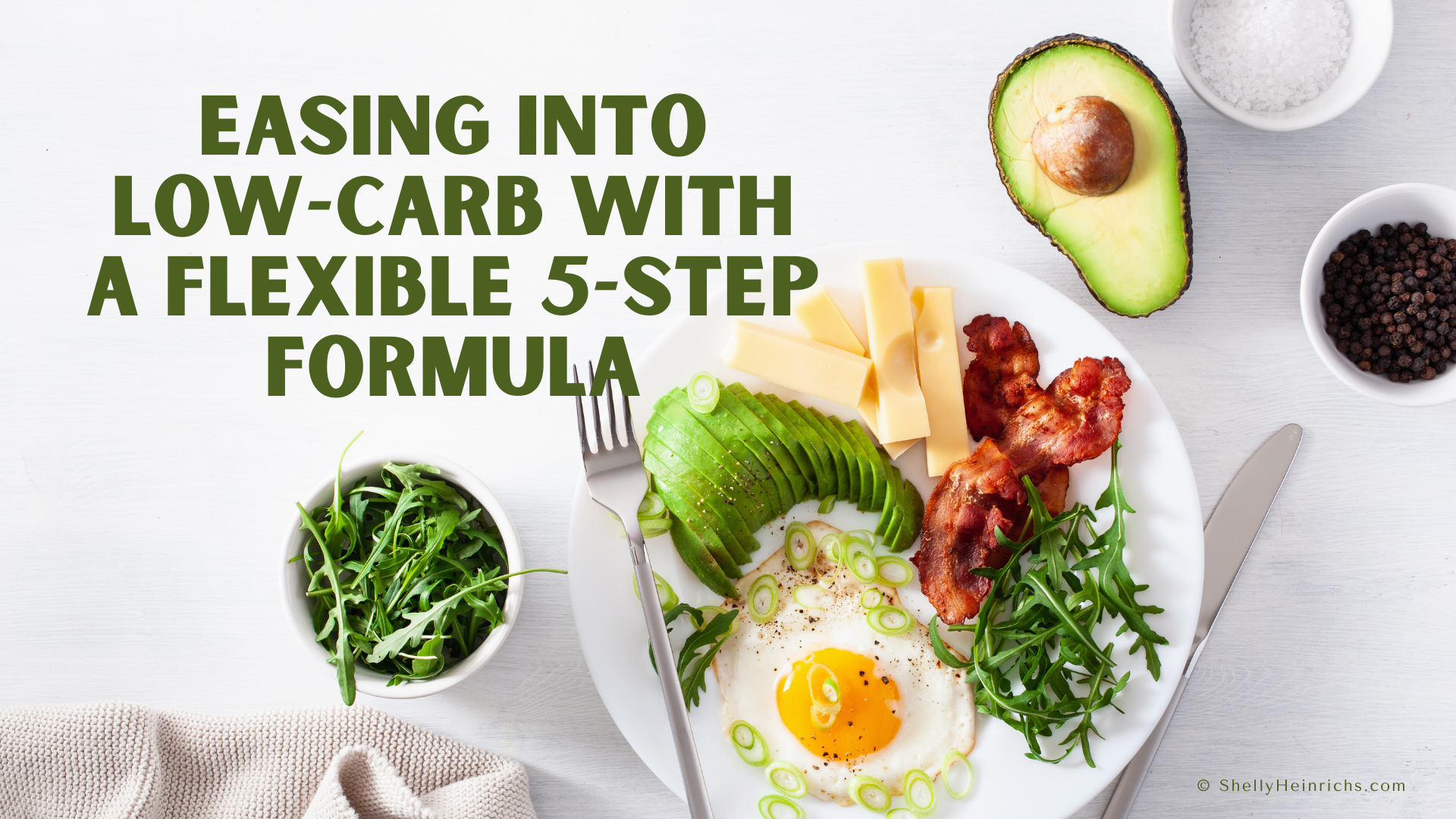
Eating Whole Foods - What’s The Big Deal?
In this blog post, you’ll learn about the benefits of eating whole foods. I’ll also point out the hidden dangers in highly processed foods in case you didn’t really know. As you work towards “getting healthy”, it helps to understand the impact of our food choices. This is especially important for those of us wanting to reverse metabolic health conditions like pre-diabetes or type 2 diabetes. Perhaps you’re looking to have more energy, lose weight and just feel better! Take the time to choose and prepare whole foods instead of pre-packaged convenience foods or take-out. I promise, you will get much better results on your health goals!
Low Carb - A Good Start For Everyone!
You may know I am a big believer in low carb for everyone – as a society we consume far too much sugar and starches, so we can all benefit from less junk in our diets. If you are extremely overweight and have one or more metabolic diseases like high blood pressure, elevated blood glucose (like type 2 diabetes), then keto can be a great option for you. Many feel that keto would be too strict for them, so I recommend you start with low carb and make small changes. I’d rather you made some changes, versus none at all! I recommend a whole foods diet no matter which way of eating you follow – vegetarian, paleo, Mediterranean etc. You’ll gain many health benefits from ditching the highly processed foods that line the grocery store shelves.
Imagine your body as a sophisticated machine. Just like any high-performing machine, it requires premium fuel to operate efficiently. That’s where whole foods come in – they are the optimal fuel for our bodies. Whole foods are unprocessed or minimally processed and that come straight from nature – think fresh vegetables, fruits, nuts, seeds, meat, and fish. These foods are packed with essential nutrients that our bodies need to thrive.
Modern Diets - What Happened?
Our modern diet is increasingly loaded with processed foods and sugars, which are like putting low-grade fuel into a luxury car. These foods might be convenient and momentarily satisfying, but they come with a cost. Processed foods are often high in unhealthy fats, sugars, and additives while being low in essential nutrients. They can lead to a host of metabolic health issues, including weight gain, blood sugar imbalances, and even chronic diseases.
But why are whole foods so much better? The answer lies in their composition. Whole foods are rich in vitamins, minerals, antioxidants, and other nutrients that are essential for our body’s functions. They provide a balanced spectrum of nutrients that work together to support our health. The fiber in whole foods helps regulate digestion and blood sugar levels, while the healthy fats and proteins keep us satiated and energized.
Processed foods often contain refined sugars and carbohydrates, which can cause spikes in our blood sugar levels. This roller coaster of highs and lows can lead to cravings, overeating, and eventually, health problems like insulin resistance and type 2 diabetes. Many processed foods contain additives and preservatives that can have adverse effects on our health. A packaged product with added fiber to bring the “net carbs” down to what appears to be a good level isn’t the same. Counting only net carbs is a slippery slope that food manufactures have jump on. I recommend counting total carbs for the best results on either a low carb or keto diet.
The Importance of Good Food Choices
The impact of food choices becomes even more critical for those of us managing weight and blood sugar issues. Adopting a diet rich in whole foods can make a huge difference. It helps in stabilizing blood sugar levels, reducing cravings, and promoting a healthy weight. The nutrient density of whole foods means we’re nourishing our bodies with everything they need to heal and maintain optimal health. This way of eating also leads to less cravings for sugar.
Let’s look at the benefits of whole foods in more detail, understand the drawbacks of processed foods and sugars, and learn how to make healthier food choices. Whether you’re well into your health journey or just starting, understanding the role of whole foods is important for anyone looking to improve their health and well-being.
Eating whole foods is not just about dieting; it’s about making a lifestyle change that nourishes your body, mind, and soul. It’s about choosing foods that bring you closer to your health goals and help you live a vibrant, energetic life.
Understanding Whole Foods
On our journey for better health and wellness, especially for those of us following a low carb or ketogenic path, understanding whole foods really matters. Whole foods are the foundation of a nutritious diet, but what exactly are they, and why are they so beneficial, particularly for individuals who are overweight and struggling with blood sugar balance?
Whole foods are foods that are as close to their natural state as possible. These include fruits, vegetables, nuts, seeds, whole grains, meat, and fish. They are unrefined and unprocessed, devoid of added sugars, preservatives, or other additives. The beauty of whole foods lies in their simplicity and their richness in nutrients. They are packed with vitamins, minerals, antioxidants, fiber, and healthy fats – all essential for our body’s optimal functioning.
In a low carb or ketogenic diet, the focus shifts to foods that are high in healthy fats and proteins while being low in carbohydrates. This doesn’t mean just choosing any fat or protein source; it means focusing on high-quality, whole food sources. For instance, choosing grass-fed meats, wild-caught fish, fresh, non-starchy vegetables, and nuts and seeds. These foods provide the body with necessary nutrients without the high carb content that can disrupt blood sugar and insulin levels.
Why Are Whole Foods SO Important?
But why are whole foods particularly beneficial for those who are overweight and have blood sugar balance issues? The answer lies in the way these foods interact with our bodies. Whole foods are digested more slowly than processed foods, leading to a slower, more balanced release of energy. This is important for maintaining stable blood sugar levels and avoiding the spikes and crashes associated with high-carb, processed foods.
Whole foods are more satiating. They help you feel full longer, reducing the likelihood of overeating or snacking on unhealthy options. This is especially important if you are wanting weight loss. When you’re satisfied with nutrient-dense foods, you’re less likely to reach for quick, unhealthy fixes.
The nutrient density of whole foods also plays a critical role in overall health. They provide the nutrients our bodies need to function properly, support our immune system, and help repair and maintain our cells and organs. For someone on a ketogenic diet, these nutrients help in maintaining muscle mass, supporting brain function, and providing energy.
The Building Blocks for a Healthy Lifestyle
Whole foods also bring variety and flavor to a ketogenic diet. Far from being restrictive, a whole-food-based diet offers a plethora of options for delicious, nutritious meals. From a succulent piece of salmon paired with a fresh salad to a hearty bowl of vegetable stir-fry with nuts, the options are endless and far from monotonous. Herbs and spices give your dishes a burst of flavour without added chemicals and preservatives that are found in packaged convenience foods.
Whole foods are not just food items; they are the building blocks of a healthy lifestyle. For someone on a ketogenic journey, particularly those battling weight and blood sugar issues, whole foods offer a path to balanced nutrition, satisfying meals, and overall wellness.
We’re going to look into the dangers of processed foods and sugars, further highlighting why whole foods are the superior choice for a healthy life and weight loss.
The Detriments of Processed Foods and Sugars
These days, processed foods and sugars have become ubiquitous in our diets, offering convenience and instant gratification. However, this convenience comes at a significant cost to our health, particularly for those wanting to follow a low carb or ketogenic diet. We lead a busy life and are short on time, so picking up a convenience meal saves time but comes up short on quality ingredients. We’re going to look at the adverse effects of these foods and understand why steering clear of them is an important step for achieving better overall health.
Highly Processed Foods - The Real Culprit!
Processed foods are those that have been altered from their natural state for convenience. They often contain added sugars, unhealthy omega 6 fats, preservatives, and artificial ingredients. While not all processed foods are harmful, many are high in calories, low in nutrients, and contribute to a range of health problems. They almost always contain highly processed seed oil – omega 6 – and this is putting our omega 3 to 6 ratio out of balance. We should be eating in a 1:1 ratio and it’s estimated that most are eating a 1:20 ratio which is way out of balance and causing inflammation throughout our bodies.
One of the primary issues with processed foods is their high sugar and refined carbohydrate content. These ingredients can cause rapid spikes in blood sugar levels, leading to a cycle of highs and lows that can be particularly detrimental for individuals with blood sugar balance concerns. Over time, these spikes can lead to insulin resistance, a precursor to type 2 diabetes, and other metabolic disorders. Blood sugar high’s and then the corresponding low, cause cravings which are often hard to ignore. The preservatives and artificial additives in these processed foods can cause inflammation in the body, leading to chronic health issues, including heart disease, arthritis, and certain types of cancer.
The Overconsumption of Sugar
The overconsumption of processed foods and sugars also has a psychological aspect. These foods are often designed to be hyper-palatable, meaning they are specifically engineered to trigger pleasure centers in the brain, leading to overeating and addiction-like behaviours. This makes it difficult for individuals trying to adhere to a healthy, balanced diet, as cravings for these foods can be powerful and persistent. The best way to stop the cravings is to stop eating that food
Processed foods lack many of the essential nutrients our bodies need to function optimally. They are often devoid of fiber, vitamins, and minerals, leading to nutritional deficiencies over time. This lack of nutrients can have wide-ranging effects on our health, from poor digestion and reduced immune function to decreased energy levels and impaired cognitive function.
The impact of processed foods and sugars on our health cannot be overstated. For individuals on a ketogenic diet and those dealing with weight and blood sugar issues, avoiding these foods is important. By focusing on whole, unprocessed foods, we can nourish our bodies, stabilize our blood sugar levels, and make our journey to better health and well-being much easier!
Whole Foods and Blood Sugar Balance
The ins and outs of blood sugar management can seem hard, especially for those on a standard diet and struggling with weight issues. However, the key to stable blood sugar levels and improved health might just lie in the power of whole foods and a low carb or ketogenic lifestyle. Let’s learn how whole foods contribute to blood sugar balance and why they are essential for individuals aiming to regulate their blood sugar levels.
Whole foods, by their very nature, are nutrient-dense and low in processed sugars and refined carbohydrates – the primary culprits in blood sugar spikes. When we consume whole foods, their natural composition – rich in fiber, healthy fats, and protein – helps to slow down the absorption of glucose into the bloodstream. This results in a more gradual increase in blood sugar levels, rather than the sharp spikes caused by processed foods.
Fiber plays a particularly crucial role in this process. Found in abundance in whole foods like vegetables, nuts, seeds, and certain fruits, fiber slows down the digestion of carbohydrates and the absorption of sugar. This means that the sugar in whole foods enters the bloodstream at a slower, more controlled rate, preventing the sudden spikes that can lead to insulin resistance and eventually diabetes.
The Glycemic Index
Whole foods typically have a lower glycemic index (GI) than processed foods. The GI is a measure of how quickly a food raises blood sugar levels. Foods with a high GI, like many processed foods, cause rapid spikes in blood sugar. Low GI foods, like most whole foods, result in a slower, more gradual increase. This is especially important for those with diabetes or prediabetes, as managing blood sugar fluctuations is so important for their health.
Including a variety of whole foods in your diet also ensures a steady supply of essential nutrients that support overall metabolic health. These nutrients, including magnesium, chromium, and omega-3 fatty acids, play a role in maintaining healthy blood sugar levels. For instance, magnesium helps regulate insulin action, while omega-3 fatty acids have been shown to improve insulin sensitivity.
It’s not just about what whole foods contain; it’s also about what they don’t contain. Whole foods are free from added sugars and artificial ingredients that can elevate blood sugar imbalances and weight gain. By choosing whole foods over processed options, you can avoid these harmful additives. This will support your body’s natural ability to regulate blood sugar.
Blood Sugar Management
In addition to their direct impact on blood sugar levels, whole foods also contribute to overall health and well-being, which is essential for effective blood sugar management. A diet rich in whole foods can lead to weight loss. It will reduce inflammation, and improve heart health. All of these factors contribute to better blood sugar control.
Whole foods are more than a dietary choice; they are the path to better health and balanced blood sugar levels. For those on a ketogenic diet, or anyone struggling with blood sugar issues, incorporating a variety of whole foods into your diet can make a significant difference. Remember that each meal is an opportunity to nourish your body and support your health journey. Make the best choices at each meal.
Weight Management with Whole Foods
Starting a weight loss journey can often feel overwhelming. Incorporating whole foods into your diet can make this process both effective and enjoyable. For those struggling with blood sugar issues, understanding the role of whole foods in weight management is key. Let’s look at how whole foods contribute to a healthy weight and why they are an integral part of a sustainable weight loss strategy.
Whole foods are inherently rich in nutrients and low in empty calories. This means they provide your body with the essential nutrients it needs. Processed foods are often calorie-dense and nutrient poor. Whole foods offer a balance of vitamins, minerals, fiber, healthy fats, and proteins. This balance is key to maintaining a healthy weight. It ensures your body gets what it needs without unnecessary excess.
A significant advantage of whole foods in weight management is their ability to induce satiety – the feeling of fullness. Thanks to their high fibre and protein content, whole foods help you feel full longer. This reduces the likelihood of snacking on unhealthy options and overeating. For example, a meal comprising lean protein, such as chicken or fish, alongside a generous portion of vegetables, provides satiety and stabilizes blood sugar levels, making it easier to manage portion sizes and resist cravings. Processed foods that are nutrient poor leave your body craving nutrients, so you tend to over-eat to compensate.
Fibre in Weight Management
The role of fibre in whole foods cannot be overstated when it comes to weight management. Fiber is important for digestive health (think of your gut buddies in your microbiome). Fibre also slows down the digestion process, leading to a more prolonged feeling of fullness. This slow digestion is particularly beneficial for blood sugar control. Fibre can ease the rapid spikes and drops that can lead to cravings and overeating.
Whole foods also play a big role in metabolic health. Nutrient-rich diets from whole foods improve metabolism. This makes it easier for the body to burn fat and build muscle. This is especially true for those on a ketogenic diet. This diet focuses on high-fat, moderate-protein, and low-carb foods, which can significantly impact metabolic processes.
A diet rich in whole foods can lead to more than just physical changes; it can transform your relationship with food. Whole foods offer a variety of flavours and textures that processed foods simply can’t match. Learning to appreciate and enjoy these natural flavours can lead to a more mindful eating experience. Remember food is not just fuel but also a source of pleasure and nourishment.
Incorporating whole foods into your diet doesn’t have to be a drastic change. It can be as simple as replacing processed snacks with nuts and seeds. Choose lower carb fruits as you increase your intake of fresh fruits and vegetables. Each small step can have a significant impact on your weight management journey. Embrace the variety, flavor, and nourishment that whole foods bring to your table! Watch them transform your health journey.
Transitioning to a Whole Foods Diet
Adopting a whole foods diet will be a big step towards better health. This is especially true for those dealing with weight and metabolic health issues like blood sugar balance. However, making this transition can seem daunting at first. This section aims to guide you through the process of incorporating more whole foods into your diet. You will find practical tips and strategies to make this change both achievable and enjoyable.
Understanding the Basics
The first step in transitioning to a whole foods diet is understanding what it entails. Whole foods are unprocessed or minimally processed foods that are close to their natural state. The key is to choose foods that are free from added sugars, preservatives, and artificial ingredients.
Starting Small and Build GraduallyTransitioning to a whole foods diet doesn’t have to be an all-or-nothing approach. Start small by making one or two changes at a time. For instance, you could begin by swapping out processed snacks for whole food options like fruits or nuts. Gradually, you can increase the number of whole foods in your meals, ensuring a smoother and more sustainable transition. Don’t overwhelm yourself with a complete make-over in one day. Small steps for long term success!
Meal Planning and PreparationPlanning your meals ahead of time can significantly ease the transition to a whole foods diet. Dedicate some time each week to plan your meals, focusing on incorporating a variety of whole foods. Preparing meals in advance can also help you stick to your whole foods diet. This really pays off on busy days when you might be tempted to reach for convenience foods due to lack of time. I recommend meal prep on a day where you have a few hours to focus on this task.
Reading Labels CarefullyWhen shopping for food, it’s important to read labels. Look out for hidden sugars, unhealthy fats, and artificial additives. Even foods that seem healthy can contain unexpected, processed ingredients. Becoming a smart label reader will help you make informed choices that align with your whole foods approach. Make sure you can read the ingredients and know what they are. I tend skip a product if it has a long ingredient list.
Exploring New Recipes and FlavoursOne of the joys of a whole foods diet is the opportunity to explore new recipes and flavours. Whole foods offer a rich variety of tastes and textures that can transform your meals. Experiment with new fruits, vegetables, and protein sources to keep your diet interesting and enjoyable. You don’t need to be a whiz in the kitchen! There are plenty of easy recipes that require minimal cooking skills – think sheet pan meals!
Overcoming ChallengesTransitioning to a whole foods diet can come with its challenges, such as time constraints, budget concerns, or resistance from family members. Address these challenges head-on by finding quick and easy whole food recipes. Be mindful of seasonal produce to reduce costs. Involve your whole family in the process of choosing and preparing whole foods. If your family wants pizza, consider making your own individual mini-pizza’s. Let everyone assemble their own with toppings they like. Serve with a salad and presto, a healthy dinner everyone loves. When my kids were all at home, we used to do a family pizza night every Friday! The kids loved making their own.
Whole Food MisconceptionsThere are many misconceptions about a whole foods diet, such as it being overly restrictive or difficult to maintain. Breaking down these misconceptions matters. A whole foods diet is incredibly diverse and can be adapted to fit any lifestyle. It’s about nourishing your body with high-quality, natural foods, not restricting yourself. We are so used to having food instantly, that taking time to cook from scratch seems foreign. It’s time to get back to the basics one meal at a time.
Eat Whole Foods - It’s The Best Choice!
It’s clear that the choices we make at the dining table have a huge impact on our health and well-being. For individuals working to reverse type 2 diabetes or other metabolic health issues, switching to a whole foods diet is life changing. Moving to whole foods is not just about changing what we eat. It’s about transforming how we view food and its role in our lives. For those struggling with weight loss and health issues, whole foods are a path to better health. It’s a promise of a brighter, healthier future. As you continue your journey, remember that each meal is an opportunity to nourish your body. Learn to respect your health, and cherish the natural bounty that nature provides.
Want help putting this into practice?
Send me a message and I'll reply within 48 hours.